
Old silk sarees often carry two kinds of value: sentimental value and financial value. A saree may have been worn for a wedding, inherited from a family member, or carefully stored for years. Even when it is no longer used, its silk, zari, craftsmanship, and design can still make it valuable.
However, determining the right price for an old silk saree is not as simple as looking at its age or original purchase price. Professional buyers consider several factors before making an offer. Understanding these factors can help you make a more informed decision when selling your sarees.
What Is Old Silk Saree Valuation?
Old silk saree valuation is the process of assessing a saree’s material, craftsmanship, condition, zari work, and overall market value to determine a fair selling price.
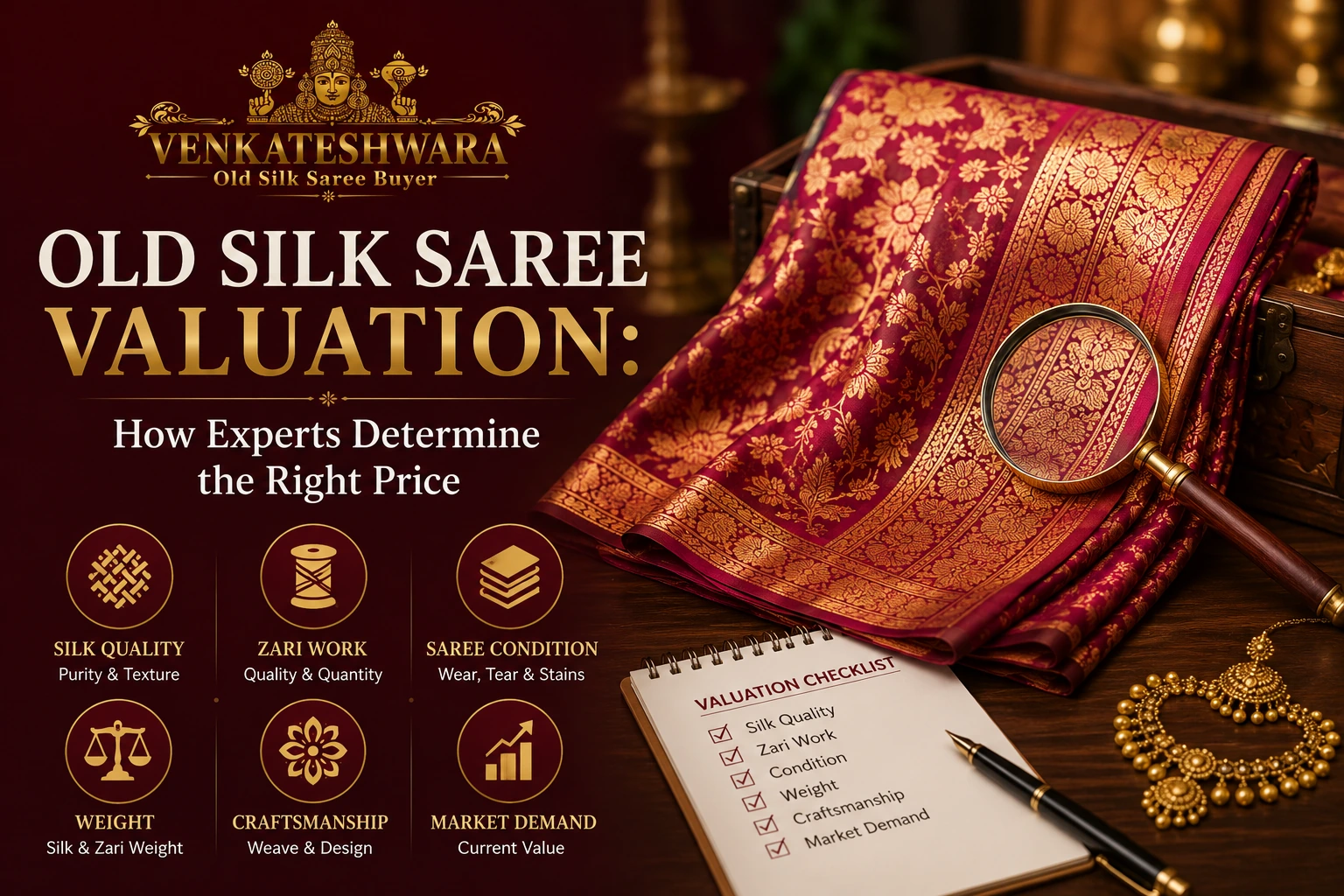
A professional evaluation generally considers:
- Silk quality and purity
- Zari quality and quantity
- Saree weight
- Overall condition
- Weaving technique
- Design and craftsmanship
- Age and authenticity
- Current market demand
The final price can vary from one saree to another, even when both appear similar.
Why Silk Quality Matters in Saree Valuation
The type and quality of silk are among the first things an experienced buyer examines. Pure silk generally has stronger resale potential than synthetic or blended fabrics.
Traditional varieties such as Kanchipuram, Banarasi, Mysore, Arani, Dharmavaram, Patola, and Pochampally can attract attention because of their distinctive weaving traditions and craftsmanship.
The texture, shine, strength, and overall feel of the fabric can help an experienced evaluator understand its quality.
How Zari Work Affects the Price
Zari is another important factor in old silk saree valuation. Traditional sarees may feature gold-coloured, silver-coloured, or other decorative zari work across the border, pallu, and body.
Experts examine:
Zari Coverage
A saree with extensive zari work may have a different valuation from one with a simple border.
Zari Condition
Tarnishing, fading, broken threads, or significant wear can affect the overall assessment.
Craftsmanship
Intricate traditional patterns and detailed weaving can add to the appeal of a saree.
It is therefore important not to judge a saree’s value only by its appearance. The material and construction behind the zari also matter.
Does the Age of a Saree Increase Its Value?
Age alone does not automatically make a saree more valuable.
An older saree that has been poorly stored may have stains, weakened fabric, or damaged zari. On the other hand, a well-preserved vintage saree with authentic craftsmanship may attract greater interest.
Experts therefore consider age together with:
- Authenticity
- Condition
- Rarity
- Weaving style
- Fabric quality
- Zari work
A vintage saree should be professionally assessed rather than valued simply because it is old.
How Saree Condition Influences Valuation
The condition of a saree can have a direct effect on its resale value.
During an evaluation, buyers may look for:
- Stains and discoloration
- Tears or holes
- Faded colours
- Damaged zari
- Fabric thinning
- Signs of moisture damage
- Previous repairs
This does not necessarily mean that a damaged saree has no value. Genuine silk and zari may still make it worth evaluating.
Does Saree Weight Matter?
Yes, weight can be one of the factors considered during a professional assessment. Traditional silk sarees with substantial fabric and zari may weigh more than lightweight varieties.
However, weight should not be used as the only measure of value. A lighter saree with exceptional craftsmanship or high-quality silk may still be valuable.
This is why a complete inspection is more useful than relying on a single factor.
Why Design and Craftsmanship Matter
Traditional silk sarees are valued not only for their materials but also for the skill involved in making them.
Handwoven patterns, traditional motifs, distinctive borders, temple designs, floral work, and regional weaving styles can contribute to a saree’s appeal.
A saree with a distinctive design may therefore receive a different valuation from another saree made from similar material.
How Experts Determine the Right Price
A professional evaluation usually involves several stages.
Step 1: Identify the Saree Type
The evaluator first determines the likely category or weaving tradition of the saree.
Step 2: Examine the Silk
The fabric is inspected for quality, texture, strength, and signs of wear.
Step 3: Check the Zari
The border, pallu, and decorative zari work are examined carefully.
Step 4: Assess the Condition
The saree is checked for stains, tears, fading, repairs, and other damage.
Step 5: Consider Craftsmanship and Demand
Design, weaving quality, uniqueness, and current buyer interest are considered.
Step 6: Provide a Valuation
After considering the relevant factors, the buyer provides an offer based on the assessment.
This approach creates a more informed valuation than simply estimating a price from the saree’s original purchase cost.
Venkateshwara Old Silk Saree Buyer – Professional Saree Valuation in Bangalore
Venkateshwara Old Silk Saree Buyer is helping customers turn their cherished weaves into lasting value. Based in Bengaluru, we specialize in buying traditional silk sarees including Kanchipuram, Banarasi, Mysore, Arani, Dharmavaram, Patola, and Pochampally.
Our approach focuses on making the selling process convenient and transparent. Customers can share saree photographs, arrange an evaluation, and discuss the value of their collection before completing a transaction.
We also offer doorstep service and instant payment, making the process convenient for customers who prefer not to travel with valuable sarees.
Tips to Prepare Your Sarees for Valuation
You can make the evaluation process easier by preparing your sarees properly.
Keep Sarees Dry
Moisture can damage silk and zari over time.
Avoid Unnecessary Washing
Repeated washing may affect the fabric and decorative work.
Preserve Purchase Documents
Bills, certificates, or other information about the saree can be useful when available.
Keep Sarees Properly Folded
Use breathable fabric for storage and avoid prolonged exposure to direct sunlight.
Organize Your Collection
Separate different saree types so that each piece can be evaluated individually.
Can Damaged Silk Sarees Still Have Value?
Yes. A damaged saree should not automatically be considered worthless.
A saree may still have value because of its silk fabric, zari, weaving, or reusable material. The extent of damage will influence the final offer, but only a proper assessment can determine its actual worth.
This is particularly relevant for old sarees that have been stored for many years.
Why Professional Valuation Is Better Than Guessing
Online estimates and informal opinions can give you a general idea, but they cannot replace a physical inspection.
Professional valuation helps you understand:
- What type of silk you own
- The condition of the saree
- The importance of zari work
- The strengths and limitations of the saree
- A realistic selling value
If you have multiple old silk sarees, professional evaluation can also help you understand which pieces may have greater resale potential.
Conclusion
Old silk saree valuation depends on much more than age. Silk quality, zari work, condition, weight, craftsmanship, authenticity, and market demand all contribute to the final price.
If you are planning to sell an old silk saree, taking the time to understand these factors can help you make a better-informed decision. Instead of guessing its value, consider getting the saree evaluated by an experienced buyer.
At Venkateshwara Old Silk Saree Buyer, we help customers in Bengaluru turn unused and cherished silk sarees into lasting value through a convenient evaluation and selling process.
FAQs
Experts consider silk quality, zari work, condition, weight, craftsmanship, authenticity, age, and current market demand.
No. Age alone does not determine price. Condition, authenticity, silk quality, zari, craftsmanship, and demand are also important.
Yes. The quality, quantity, condition, and craftsmanship of zari work can significantly influence a saree’s valuation.
Yes. Damaged sarees may still have value depending on their silk, zari, size, craftsmanship, and extent of damage.
You can contact Venkateshwara Old Silk Saree Buyer at 086180 84350 and share details or photographs of your sarees to begin the evaluation process.