
Silk sarees are more than traditional clothing. Many are carefully preserved for years and passed down through generations, making them valuable both emotionally and culturally. However, when you decide to sell an old silk saree, its resale value can vary significantly depending on several factors.
Whether you have an old Kanchipuram saree inherited from a family member or a gently used Mysore silk saree sitting in your wardrobe, understanding what buyers look for can help you set realistic expectations.
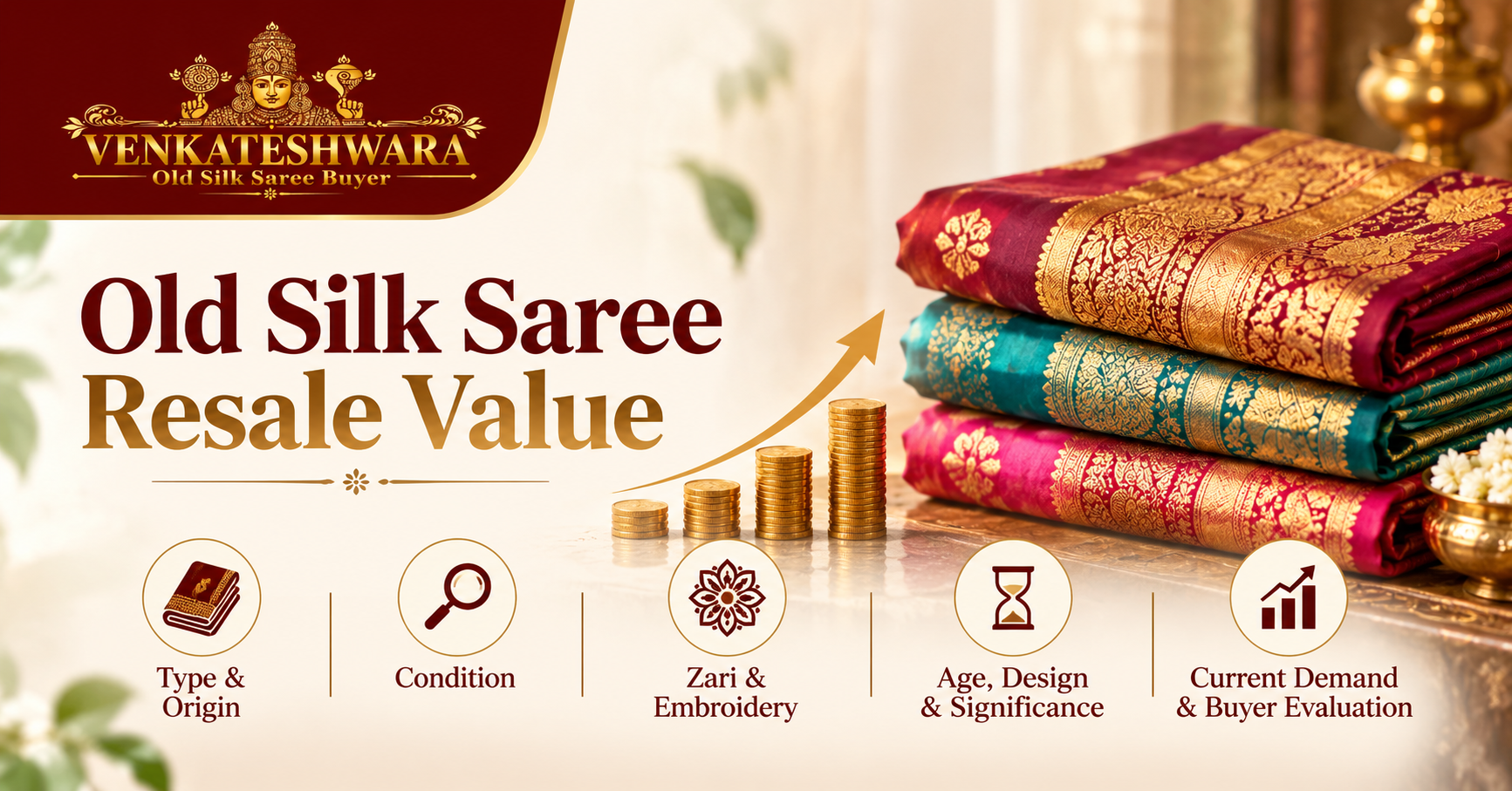
Here are five important factors that can influence the resale value of an old silk saree.
1. Type and Origin of the Silk Saree
The type of silk is one of the first things buyers consider. Different traditional weaving centres are known for their distinctive fabrics, designs and craftsmanship.
Some examples include:
- Kanchipuram silk sarees
- Banarasi silk sarees
- Mysore silk sarees
- Arani silk sarees
- Dharmavaram silk sarees
- Patola sarees
- Pochampally sarees
The weaving tradition, origin and characteristics of a saree can influence its desirability in the resale market. Sarees associated with established traditional weaving regions may attract greater interest, particularly when their original features are well preserved.
2. Condition of the Saree
The physical condition of an old silk saree is another major consideration.
A saree that has been stored properly and shows minimal signs of wear may have better resale potential than one that has suffered extensive damage over time.
Buyers may look at:
- Fabric condition
- Stains or discolouration
- Tears or holes
- Loose threads
- Damage caused by insects
- Condition of the zari
- Fading
- Previous alterations or repairs
This does not necessarily mean that a damaged saree has no value. Even older or worn silk sarees may still be considered depending on their material, craftsmanship and overall condition.
3. Zari and Embroidery Work
The decorative work on a silk saree can also affect its appeal and value.
Traditional zari borders, detailed pallu designs and intricate motifs can make certain sarees particularly attractive. The condition and extent of the zari work are also important.
For example, an old saree with a well-preserved traditional border and detailed pallu may be assessed differently from a similar saree where the decorative elements have deteriorated considerably.
It’s therefore useful to avoid judging an old silk saree only by its age. The craftsmanship and detailing can be just as important.
4. Age, Design and Traditional Significance
Age can contribute to the interest surrounding a saree, but older does not automatically mean more valuable.
A vintage saree with a distinctive traditional design, unusual weaving style or strong cultural association may attract attention from buyers. At the same time, a relatively newer saree in excellent condition may also have good resale potential.
Factors such as:
- Traditional motifs
- Rare or distinctive designs
- Weaving techniques
- Original craftsmanship
- Vintage appeal
- Cultural significance
may all be considered during an evaluation.
If you have an heirloom saree, it can be useful to preserve any information you have about its origin, approximate age or previous ownership.
5. Current Demand and Buyer Evaluation
The resale market can change over time. Demand for particular types of silk, traditional designs and reusable textiles may influence how a saree is valued.
The buyer’s assessment is therefore an important part of the process.
A professional buyer may examine the saree’s material, craftsmanship, condition and overall characteristics before determining an offer. This is why getting an evaluation from a buyer who understands different varieties of traditional silk can be helpful.
How to Get Your Old Silk Saree Ready for Evaluation
Before approaching a buyer, take a few simple steps:
Keep the saree clean and dry: Store it properly and avoid unnecessary handling.
Take clear photographs: Capture the full saree, border, pallu and any distinctive designs.
Mention known details: If you know the saree’s type, approximate age or place of purchase, share that information.
Don’t hide damage: Be transparent about stains, tears, repairs or other issues.
Compare your options: If you’re unsure about the value, consider getting an assessment before making a decision.
Selling Old Silk Sarees Made Simple
For many people, the biggest concern is not knowing where to start. A convenient buying service can simplify the process by allowing sellers to share photographs first and receive an initial assessment before proceeding.
Venkateshwara Old Silk Saree Buyer is a Bengaluru-based service that specialises in purchasing different varieties of traditional silk sarees. With extensive experience in the old-saree market, the team evaluates sarees based on their individual characteristics rather than simply their age.
The service covers traditional varieties such as Kanchipuram, Banarasi, Mysore, Arani, Dharmavaram, Patola and Pochampally sarees. Customers can share photographs through WhatsApp, arrange a doorstep pickup and receive payment once the saree has been evaluated.
For those who don’t necessarily want a cash sale, the business also provides a saree exchange option, allowing customers to exchange eligible old sarees for new ones.
Final Thoughts
The resale value of an old silk saree depends on more than just how old it is. Type, condition, craftsmanship, zari work, design, heritage and current buyer demand can all influence its value.
If you have old silk sarees that you no longer use, don’t assume they have no worth simply because they have been sitting in your wardrobe for years. A proper evaluation can help you understand what your saree may be worth and what options are available for selling or exchanging it.
Most importantly, choose a buyer who offers a clear evaluation process and transparent pricing, so you can make an informed decision about your cherished silk sarees.